
As artificial intelligence systems become more powerful, organizations are increasingly deploying not just one AI agent, but entire teams of them. From research agents and content writers to code generators and data analysts, coordinating multiple AI systems introduces new layers of complexity. That’s where multi-agent orchestration platforms come into play. Tools like CrewAI are designed to help teams assign roles, manage communication flows, and ensure agents collaborate efficiently rather than operate in isolation.
TLDR: Multi-agent coordination platforms help organizations manage multiple AI agents working together toward shared goals. Tools like AutoGen, SuperAGI, and MetaGPT offer structured communication, task delegation, and workflow automation similar to CrewAI. Each platform differs in flexibility, technical complexity, and use cases, so choosing the right one depends on your needs. Businesses using these systems can achieve faster execution, improved automation, and smarter AI collaboration.
Managing multiple AI agents is not simply about running several models at once. Effective coordination requires defined roles, communication protocols, memory management, task sequencing, and error handling. Without orchestration, agents can conflict, duplicate work, or produce inconsistent outputs. Below are three powerful multi-agent coordination tools that function similarly to CrewAI and enable structured AI teamwork.
1. AutoGen
AutoGen, developed by Microsoft Research, is one of the most flexible frameworks for building multi-agent conversations. It enables developers to create AI agents that can communicate with one another autonomously to complete tasks.
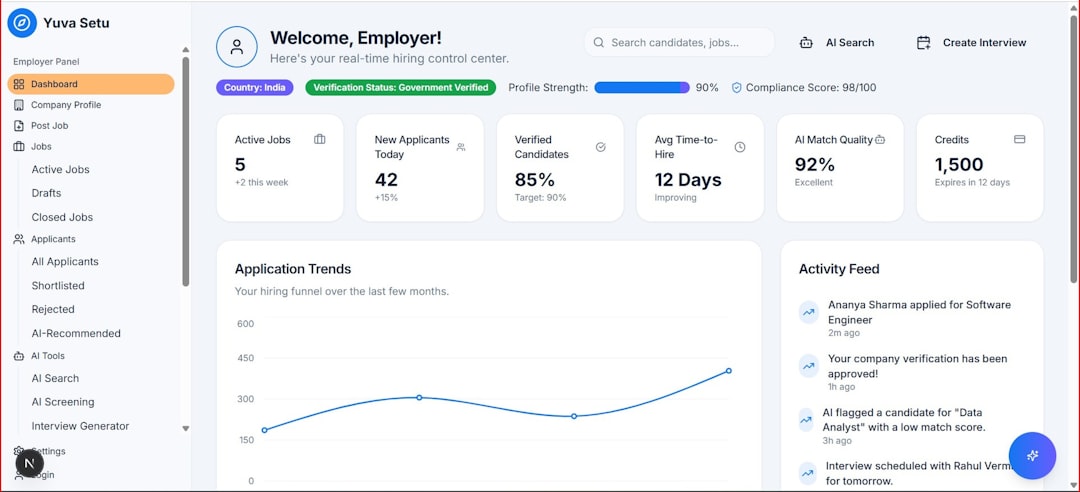
Key Features
- Conversational agent architecture: Agents communicate via structured dialogue.
- Human-in-the-loop capability: Humans can intervene when necessary.
- Tool integration: Agents can call APIs, run code, and execute scripts.
- Flexible agent roles: Define planners, critics, executors, or reviewers.
One of AutoGen’s strengths is its ability to model collaboration patterns. For example, a “Planner” agent may outline strategy, a “Researcher” gathers data, and a “Writer” creates content. A “Critic” agent might then evaluate the output and request revisions. This mirrors real-world teamwork structures.
Best For:
- Developers who want high customization
- Research environments
- Experimental agent collaboration systems
While powerful, AutoGen requires technical expertise. It is ideal for teams comfortable working with Python and designing agent communication flows manually.
2. SuperAGI
SuperAGI is an open-source autonomous AI agent framework designed for production environments. It focuses on goal-driven agents that can execute multi-step tasks with minimal supervision.
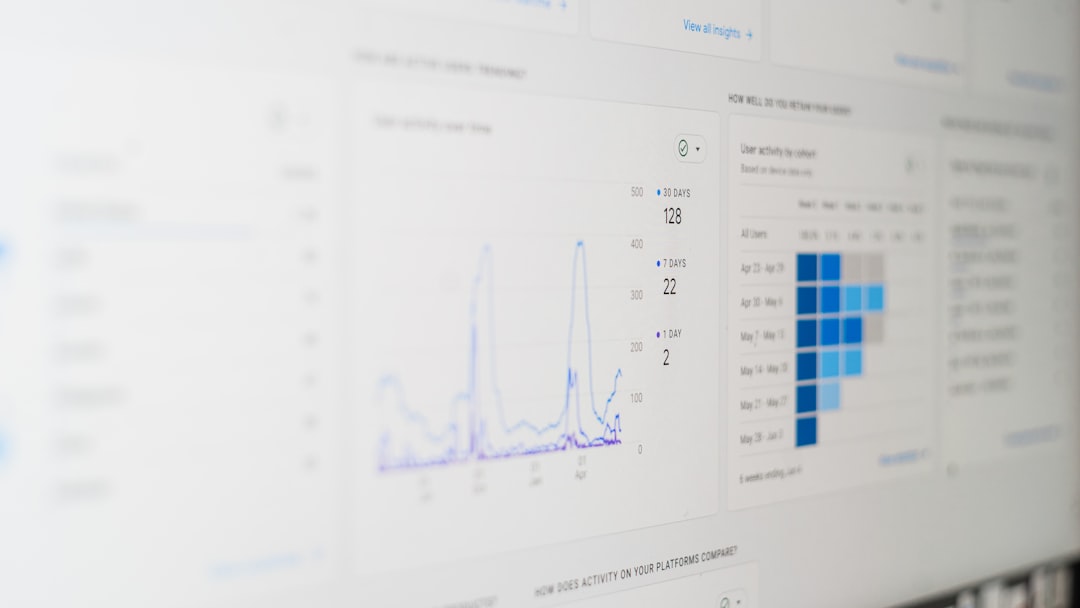
Key Features
- Task orchestration dashboard: Visualize and monitor agent workflows.
- Persistent memory: Agents retain context across sessions.
- Marketplace for tools: Extend capabilities with plugins.
- Performance telemetry: Track success rates and execution metrics.
Unlike more research-focused tools, SuperAGI emphasizes usability in real-world operations. Teams can deploy agents to perform tasks like lead generation, competitor analysis, or automated reporting.
Its structured logging and feedback loops allow project managers to understand what agents are doing at each stage. This is particularly valuable when scaling AI operations across departments.
Best For:
- Startups building autonomous AI workflows
- Operations teams automating business processes
- Users seeking a visual management interface
SuperAGI balances technical depth with operational usability, making it accessible to both engineers and product teams.
3. MetaGPT
MetaGPT takes a fascinating approach to multi-agent orchestration by structuring AI collaboration like a software development company. Each agent is assigned a specific organizational role.

Key Features
- Company-style role assignment: CEO, CTO, Product Manager, Engineer.
- Structured documentation flows: Requirements, architecture plans, and task breakdowns.
- Code generation capabilities: Automates entire development pipelines.
- Inter-agent feedback systems: Built-in review and iteration loops.
MetaGPT shines in software development scenarios. Instead of prompting one AI to “build an app,” users trigger a sequence of structured steps: requirement analysis, system design, task creation, implementation, and code review.
This layered process reduces hallucinations and increases output quality by ensuring that agents validate and refine each other’s outputs before moving forward.
Best For:
- Automated software prototyping
- Structured project execution
- Teams wanting a predefined collaboration framework
While MetaGPT is powerful, it works best within its structured methodology. Custom workflows may require adaptation.
Comparison Chart
| Feature | AutoGen | SuperAGI | MetaGPT |
|---|---|---|---|
| Primary Focus | Conversational multi-agent collaboration | Autonomous task execution | Structured software development workflows |
| Technical Complexity | High | Medium | Medium to High |
| Visual Dashboard | Limited | Yes | Limited |
| Role Customization | Highly flexible | Custom agent goals | Predefined organizational roles |
| Best For | Developers and researchers | Business automation teams | Automated development projects |
| Human-in-the-loop Support | Yes | Limited | Structured review agents |
Why Multi-Agent Coordination Matters
Single AI agents are powerful, but complex objectives often require specialization. Similar to human teams, AI systems perform better when tasks are divided according to strengths.
Benefits of coordinated AI agents include:
- Improved task accuracy through layered review processes
- Faster execution by parallelizing subtasks
- Scalability across large workflows
- Reduced hallucination risk via cross-verification
- Clear accountability through defined roles
For example, a marketing team could deploy:
- A Research Agent for trend analysis
- A Strategy Agent for campaign planning
- A Content Agent for drafting materials
- A QA Agent for brand voice validation
Instead of manually overseeing each AI output, a coordination platform ensures agents operate within a structured hierarchy.
How to Choose the Right Tool
Selecting the right coordination system depends on organizational maturity, technical expertise, and desired outcomes.
Consider the following factors:
- Customization Needs: Do you require full control over agent communication?
- Ease of Use: Is a dashboard important for non-technical stakeholders?
- Primary Use Case: Are you automating business tasks or building software?
- Scalability: Will multiple departments use the system?
- Human Oversight: How much intervention is required?
Organizations focused on experimentation may prefer AutoGen. Operational business teams often gravitate toward SuperAGI. Development-centric teams may benefit most from MetaGPT’s structured hierarchy.
The Future of Multi-Agent Systems
Multi-agent systems are evolving rapidly. Emerging enhancements include:
- Shared long-term memory systems
- Autonomous negotiation between agents
- Self-healing workflows that detect and fix errors
- Cross-platform orchestration across enterprise tools
As these technologies mature, organizations may deploy dozens or even hundreds of coordinated AI agents operating as digital workforces. The key differentiator will not be the intelligence of individual agents—but the effectiveness of their coordination.
FAQ
1. What is a multi-agent coordination tool?
A multi-agent coordination tool is a platform that enables multiple AI agents to collaborate, communicate, and execute tasks in a structured manner. It defines roles, workflows, and communication protocols to prevent chaos or redundancy.
2. How is CrewAI different from single-agent systems?
Single-agent systems rely on one AI model to complete a task. CrewAI-style platforms divide complex objectives among specialized agents, improving performance and reliability through collaboration.
3. Are these tools suitable for non-technical users?
Some platforms, like SuperAGI, are more user-friendly due to dashboards and visualization tools. Others, such as AutoGen, may require programming knowledge.
4. Can multi-agent systems reduce AI hallucinations?
Yes. By assigning reviewer or critic agents, outputs can be checked and refined before final delivery, reducing errors and inconsistencies.
5. Which tool is best for automated software development?
MetaGPT is particularly designed for software-style workflows, assigning organizational roles to agents and structuring documentation before code generation.
6. Are multi-agent systems scalable?
Yes. Most coordination frameworks are built to scale across projects, departments, and increasingly complex objectives.
As organizations transition from experimenting with AI to operationalizing it, coordination becomes the backbone of scalable automation. Platforms like AutoGen, SuperAGI, and MetaGPT demonstrate that the future of artificial intelligence lies not in isolated models, but in structured, collaborative systems working together toward shared goals.