



Machines are getting better at understanding language. Not just reading words. But understanding meaning. This magic happens with something called vector embeddings. And platforms like Cohere make it easy for anyone to use them. Even if you are not a math wizard.
TLDR: Vector embeddings turn text into numbers that computers can understand. Platforms like Cohere help you create and use these embeddings without deep technical skills. They power smart search, recommendations, chatbots, and more. If you want smarter apps, embeddings are a big piece of the puzzle.
Let’s break it down in a simple way.
What Are Vector Embeddings?
Imagine you could turn every sentence into a set of numbers. Not random numbers. But numbers that capture meaning.
That is what a vector embedding is.
For example:
- “I love pizza”
- “Pizza makes me happy”
These two sentences are different. But they mean something similar. An embedding model converts them into number lists that are close together in mathematical space.
That space is called vector space.


Think of it like a giant galaxy of points. Similar ideas float near each other. Different ideas drift apart.
This trick allows computers to:
- Find similar documents
- Power semantic search
- Recommend products
- Cluster topics
- Detect intent
And it all starts with embeddings.
Why Not Just Use Keywords?
Old search engines relied on keywords.
If you typed “running shoes,” it looked for pages with those exact words.
But what if someone wrote “best sneakers for jogging”?
Keyword search might miss it.
Embeddings do not rely on exact words. They understand meaning.
That is called semantic search.
It feels smarter. Because it is.
What Is an Embedding Model Platform?
An embedding model platform does three main things:
- Provides pre-trained embedding models.
- Lets you generate embeddings through an API.
- Helps you store and search those embeddings.
Instead of building AI models from scratch, you just send text to an API.
You get back a vector.
Simple.
Platforms like Cohere specialize in this. But they are not alone.
How Cohere Makes Embeddings Easy
Cohere is built for developers. But it is friendly.
Here is how it usually works:
- You sign up for an API key.
- You send text to the embed endpoint.
- You receive a vector in JSON format.
- You store that vector in a database.
That’s it.
No deep learning PhD required.
Cohere focuses on:
- High-quality language embeddings
- Fast inference speeds
- Simple pricing
- Strong multilingual support
You can embed:
- Articles
- Product descriptions
- User queries
- Support tickets
- Entire documents
Once embedded, your app becomes powerful.
Where Are Embeddings Used?
Almost everywhere.
1. Smart Search
Search engines use embeddings to compare user queries with stored documents.
Instead of matching words, they match intent.


2. Chatbots
When paired with large language models, embeddings retrieve relevant context.
This is called retrieval augmented generation (RAG).
The chatbot:
- Converts your question into an embedding.
- Finds similar stored documents.
- Feeds them into a language model.
- Generates a smart answer.
This reduces hallucinations. And increases accuracy.
3. Recommendation Systems
Netflix. Spotify. E-commerce stores.
They compare embeddings of items and users.
If your embedding is close to a movie’s embedding, guess what?
It gets recommended.
4. Document Clustering
Have thousands of documents?
Embeddings help group similar content automatically.
No manual sorting needed.
How the Technical Flow Works
Let’s zoom out and see the full picture.

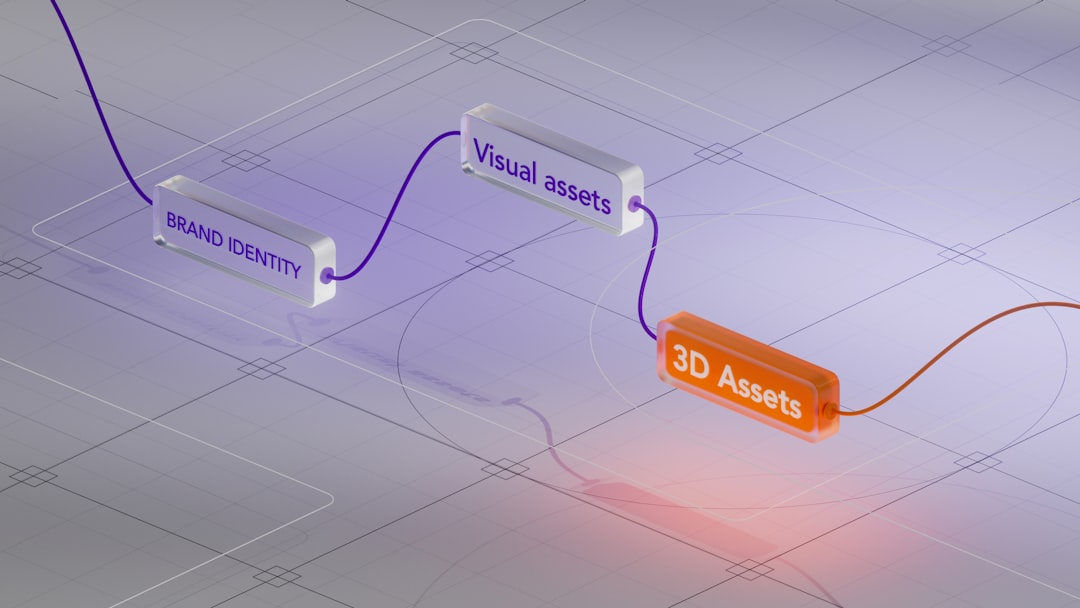
A typical embedding workflow looks like this:
- User sends text.
- Text goes to embedding API (like Cohere).
- API returns vector.
- Vector is stored in a vector database.
- Queries are converted into vectors.
- Similarity search compares vectors.
- Top matches are returned.
The key concept here is similarity search.
Instead of searching strings, you search math space.
Common similarity metrics include:
- Cosine similarity
- Euclidean distance
- Dot product
You do not need to implement these from scratch. Vector databases handle that.
Popular Embedding Platforms
Cohere is great. But it is part of a bigger ecosystem.
Here are some major players:
- Cohere
- OpenAI
- Google Vertex AI
- Hugging Face
Comparison Chart
| Platform | Ease of Use | Multilingual Support | Customization | Best For |
|---|---|---|---|---|
| Cohere | Very simple API | Strong | Moderate | Semantic search and RAG apps |
| OpenAI | Very simple API | Strong | Limited fine tuning | General AI apps |
| Google Vertex AI | More complex | Strong | High customization | Enterprise scale systems |
| Hugging Face | Flexible but technical | Varies by model | Very high | Researchers and ML engineers |
If you want simplicity, Cohere and OpenAI shine.
If you want full control, Hugging Face offers deep customization.
If you are building enterprise systems, Google Vertex fits well.
What Is a Vector Database?
You cannot talk about embeddings without mentioning vector databases.
Regular databases store rows and columns.
Vector databases store high-dimensional vectors.
They are optimized for nearest-neighbor search.
Popular options include:
- Pinecone
- Weaviate
- Milvus
- Qdrant
They connect nicely with embedding platforms.
Together, they form the backbone of modern AI apps.
Benefits of Using Platforms Like Cohere
Why not build your own embedding model?
You could. But it is hard.
Here is why platforms are attractive:
- Time saving – No model training.
- Cost effective – Pay per API call.
- Scalable – Infrastructure handled for you.
- Continuously improved – Models get updated.
- Security – Enterprise-grade protection.
You focus on building your product.
They handle the AI heavy lifting.
Things to Watch Out For
Embeddings are powerful. But not magic.
Keep these in mind:
- Large documents may need chunking.
- Storage costs can grow fast.
- Latency matters in real-time apps.
- Privacy laws may affect data usage.
Also, embeddings capture patterns from training data.
Bias can exist.
Responsible AI matters.
The Future of Embedding Platforms
We are just getting started.
Embedding models are improving in:
- Accuracy
- Speed
- Multimodal support
- Context understanding
Multimodal embeddings are especially exciting.
They combine:
- Text
- Images
- Audio
- Video
This means searching images with text becomes natural.
Or matching products based on photos.
AI systems will feel less robotic.
And more intuitive.
A Simple Example Use Case
Let’s say you run an online bookstore.
You want better search.
Here is what you do:
- Embed all book descriptions using Cohere.
- Store embeddings in a vector database.
- When a user types “space adventure with humor,” embed that query.
- Find the closest book vectors.
- Show results.
No keyword stuffing.
No manual tagging.
Just meaning-based matching.
Your users get smarter results.
You get happier customers.
The Big Picture
Vector embeddings are a bridge.
They connect human language to machine mathematics.
Platforms like Cohere make that bridge easy to build.
You do not see the complex neural networks.
You just send text. And receive vectors.
Behind the scenes, powerful transformer models do the work.
This shift is changing software.
Search is smarter.
Recommendations are sharper.
Chatbots are more useful.
All because meaning can now be measured.
Final Thoughts
If you are building modern applications, embeddings are no longer optional.
They are foundational.
And thanks to platforms like Cohere, they are accessible.
You do not need a research lab.
You need an API key. And a good idea.
Start small.
Embed some text.
Run a similarity search.
Watch what happens.
Once you see the magic of vectors in action, it clicks.
Language becomes data.
Data becomes insight.
And your applications become a whole lot smarter.