


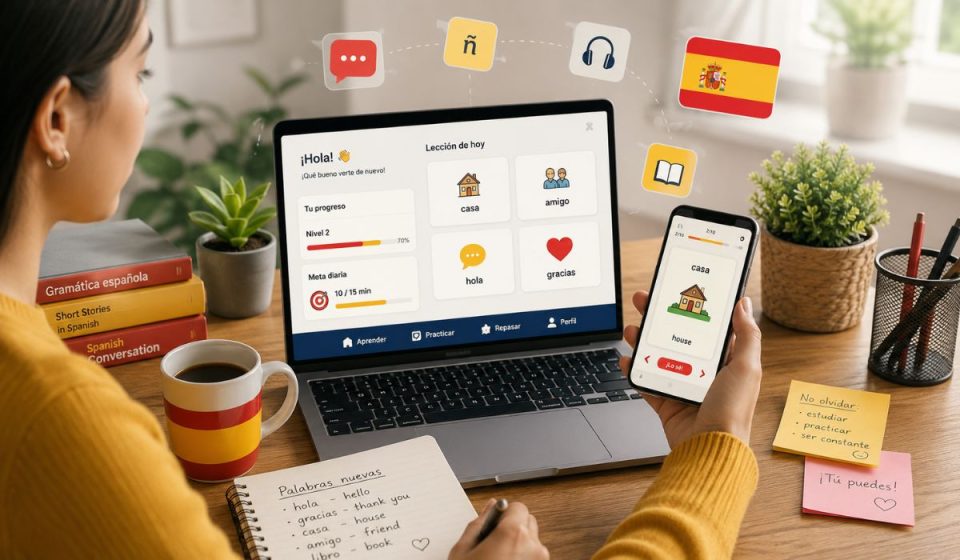
Learning Spanish can feel really exciting at first. And then it gets messy after a few days. You forget words. The grammar feels very strange. Speaking out loud feels totally awkward too.
That is completely normal. Study apps can actually help you build a solid routine. Some apps are good for your daily lessons. Others are way better for speaking practice.
A few just help you remember words for a long time. This guide covers the 5 best apps for Spanish learners. The main goal is simple. Pick the app that fixes your weak point. Do not just pick the one everyone talks about.
Quick List of the Best Apps for Spanish Learners
Here is the quick version for you.
| App | Best For | Why It Helps |
|---|---|---|
| Duolingo | Daily Spanish practice | Short lessons for vocabulary and grammar |
| Babbel | Structured lessons | Better for guided grammar and real phrases |
| Busuu | Feedback and practice | Gives lessons with native speaker feedback |
| Memrise | Vocabulary and listening | Helps with pronunciation and real clips |
| Anki | Long-term memory | Uses flashcards for serious review |
You definitely do not need all 5 apps. Most learners only need one main app. You might need one review app too.
1. Duolingo – Best for Daily Practice

Duolingo is one of the easiest apps to start right now. The lessons are very short and simple. They feel exactly like a game.
You can practice Spanish for just 10 minutes a day. You will not feel too much pressure. It is really good for beginners. It covers small parts of the language easily.
You practice reading and listening. You also do some writing and speaking in short bursts. Duolingo uses streaks to keep you coming back. The official site says it offers bite-sized lessons.
Duolingo is best if you just started Spanish. It helps you build a daily habit. It is also great if you want a free way to begin.
But do not expect it to make you fluent alone. It builds a good base. You still need to speak outside the app.
Best for:
- Beginners
- Daily practice
- Basic words and sentences
- Short lessons
- Building a study habit
2. Babbel – Best for Structured Lessons
Babbel is much better for learners who want structure. It feels less like a silly game. It is more like a guided course.
That helps a lot if you want serious lessons. Babbel focuses heavily on grammar and vocabulary. Its site says it uses methods to improve pronunciation too.
It also gives you real-world conversation practice. This app helps you understand how Spanish actually works. Verb forms and sentence order make more sense here. They are explained in a very clear order.
Babbel is not the best pick for free practice. It is better when you are ready to follow a paid plan.
Best for:
- Guided Spanish lessons
- Grammar practice
- Real-world phrases
- Pronunciation
- Learners who want a clear path
3. Busuu – Best for Practice With Feedback
Busuu is super useful because it adds something missing in other apps. It gives you actual feedback.
You can study your lessons. Then you get tips from native speakers through the community. That is helpful because Spanish is not just about choosing right answers. You need to know if your sentence sounds natural.
Busuu combines language lessons with community feedback. That makes it a great choice for serious learners.
This is highly useful for speaking and writing. You actually form your own Spanish sentences. You do not just tap answers on a screen.
Busuu is best if you already know the basics. Beginners can use it too. But feedback is better when you make your own sentences.
Best for:
- Native speaker feedback
- Speaking practice
- Writing practice
- Real sentence practice
- Learners who want correction
4. Memrise – Best for Vocabulary and Listening
Memrise is a solid app if you struggle to remember words. It focuses entirely on vocabulary and phrases. It also helps with pronunciation and listening.
The app uses really short practice sessions. It includes videos of native speakers using real Spanish. Memrise says its course helps with listening practice.
That part matters a lot. Spanish sounds clear inside a basic lesson. But it is much harder in real life. Native speakers talk very fast.
Their accents might sound different. They use phrases that do not sound like a textbook. Memrise helps you get used to that real sound.
It is not a full grammar course. But it builds a very strong word bank.
Best for:
- Spanish vocabulary
- Listening practice
- Pronunciation
- Common phrases
- Real-life language examples
5. Anki – Best for Remembering Words
Anki is not a fun app at all. It also does not look very modern. But it is incredibly strong for your memory.
Anki is basically a flashcard app. It makes you spend more time on hard cards. You spend less time on cards you already know well.
You forget words fast if you do not review them. The main method here is spaced repetition. Anki shows you a word right before you forget it.
Easy words come back much later. Hard words come back a lot sooner. This is perfect for verb forms and grammar examples.
You can make your own cards for travel phrases. Anki takes more effort than Duolingo. You have to create cards or find a good deck. But it helps massively if you use it daily.
Best for:
- Long-term memory
- Flashcards
- Spanish verbs
- Vocabulary review
- Serious learners
How to Choose the Right App
Do not download every app at the same time. That just makes learning way more confusing.
Always start with your main problem. Use Duolingo if you need a daily habit. Try Babbel if you want a clear lesson path.
Busuu is a good option for real feedback. Memrise helps with listening and vocabulary. Use Anki if you keep forgetting words.
A good setup could be this simple:
- Duolingo or Babbel for lessons
- Memrise for listening and vocabulary
- Anki for review
That is plenty for most learners. You can always add more things later.
Common Mistakes Spanish Learners Make
The biggest mistake is thinking one app does everything. It definitely will not.
Apps help you learn words and build a habit. But you still need to hear and speak Spanish outside the app.
Another huge mistake is only chasing streaks. A streak can motivate you at first. But tapping through lessons just for a streak is bad. You may not be learning anything at all.
Here are mistakes to avoid:
- Downloading too many apps
- Never speaking out loud
- Skipping review sessions
- Only doing easy lessons
- Ignoring grammar completely
- Expecting fluency from one single app
A small daily routine works much better than random long sessions. Even 15 minutes a day helps if you do it properly.
Final Thoughts
The best app totally depends on your personal goal. Duolingo is great for daily practice. Babbel gives you much more structure.
Busuu helps you with real feedback. Memrise is useful for your listening skills. Anki is super strong for your long-term memory.
You definitely do not need a perfect setup. Just start with one app that fixes your main problem. Add another app only if you actually need it.
This review breaks down exactly how different language apps work to help you choose the best fit for your study style.